



Major characteristics
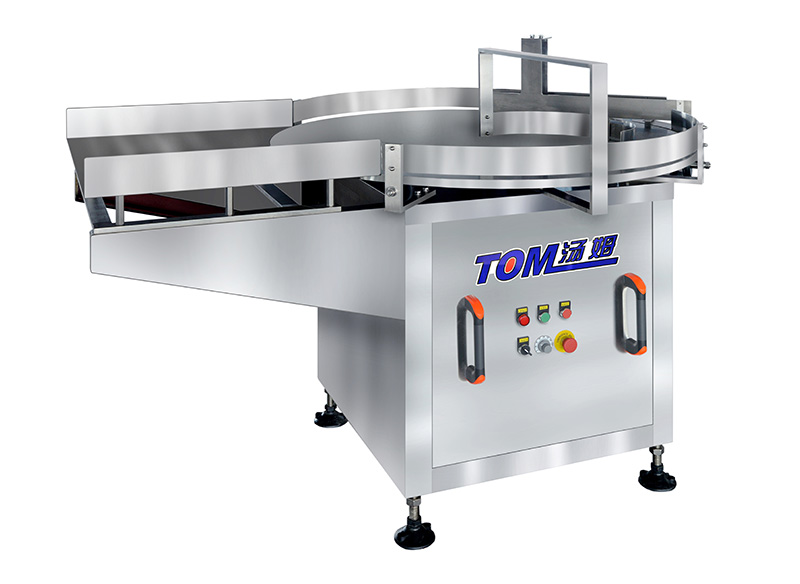
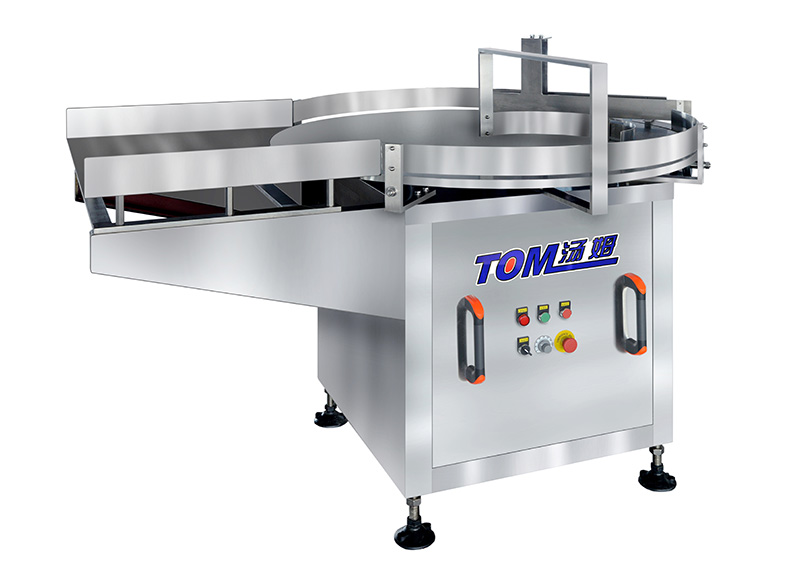
We adopt frequency stepless governor for a rotary motion , making all the bottles enter into converyer belt sequentially under the rotary tangential force toreach . the target of labor ,boost production efficiency . This bottle feeder machine can be used when it is electrified . Easy operating ,it can be widely used for glass bottles ,plastic bottles and polyester bottles for pharmaceutical , agrochemical ,food ,chemical etc .It is a good choice for small ,medium ,large factory .
Main performance parameter :
Primary Function
The core function of a bottle feeder is to transform a chaotic bulk supply of empty containers into an organized, sequential flow of properly oriented containers, ready to be cleaned, filled, capped, and labeled.
Main Types of Bottle Feeder Machines
Bottle feeders are categorized based on their mechanism for sorting and orienting containers:
3. Key Components
A typical bottle feeder machine consists of the following parts:
Bulk Hopper/Storage Bin: The large container where empty bottles are dumped in bulk.
Elevating Conveyor (Optional): A conveyor that lifts bottles from a ground-level hopper to the feeding mechanism.
Sorting/Orienting Mechanism: The specific system (rotary table, vibrating track, etc.) that orients the bottles.
Discharge Starwheel or Guide Rails: A mechanism that gently transfers the now-upright bottles from the unscrambler to the infill conveyor, maintaining proper pitch and orientation.
Control Panel (HMI): The user interface (Human-Machine Interface) to start, stop, and monitor the machine's operation, including speed adjustments.
Sensors: Photoelectric sensors to detect jams, monitor bottle flow, and ensure the system is synchronized with the downstream filler.
Frame and Casing: The robust structural frame and safety guards that enclose the moving parts.
Standard Working Principle
The operation follows a consistent logic:
Loading: Empty bottles are manually or automatically dumped into the bulk hopper.
Singulation and Orientation: The bottles are gently moved by the rotating table or vibrating conveyor. The machine's tooling uses gravity, centrifugal force, and mechanical guides to knock over or reject incorrectly positioned bottles until they are all standing upright.
Transfer: The correctly oriented bottles are fed into a discharge channel or starwheel that spaces them evenly.
Output: The singulated, upright bottles are discharged onto a conveyor that transports them to the next machine, typically a rinser, filler, or capper.
Common Applications
Bottle feeder machines are used across numerous industries for packaging liquids, powders, and granules.
Beverage Industry: Water, juice, soda bottles.
Food Industry: Sauces, cooking oils, dairy products.
Pharmaceuticals: Medicine bottles, syrup bottles, dropper vials.
Cosmetics & Personal Care: Lotion bottles, shampoo/conditioner containers, cream jars.
Household & Chemical: Detergent bottles, cleaning product containers.
Advantages of Automation
High Efficiency & Speed: Bottle feeder
can handle thousands of bottles per hour, far exceeding manual capabilities.
Labor Savings: Significantly reduces the need for manual labor to orient bottles.
Improved Hygiene: Minimizes human contact with containers, which is critical for food and pharmaceutical-grade products.
Consistency & Reliability: Provides a continuous, non-stop supply of bottles to the filling machine, optimizing overall line efficiency (OEE).
Reduced Product Damage: Gentle handling mechanisms minimize breakage and scuffing of containers.
Enhanced Safety: Automates a repetitive and potentially hazardous manual task.
Key Considerations When Selecting a Machine
Bottle Characteristics: Size, shape, weight, material (plastic, glass), and stability.
Required Speed (Containers Per Hour - CPH): Must match the speed of the filling machine.
Production Environment: Sanitary requirements (e.g., USDA, FDA, cGMP standards) will dictate materials of construction (e.g., stainless steel 304 or 316).
Changeover Frequency: How often you need to switch between different bottle types. Quick-change tooling is essential for high-mix production.
Floor Space: The physical footprint of the machine (linear models are more space-efficient).
Integration: Bottle feeder machine must be compatible with the existing or planned packaging line (filler, capper, labeler).
Bottle Feeder Machine Dimension (L*W*H ):
1700MM*1300MM*1350MM2、Weight :300kg3、Suitable diameter of bottles :Φ40mm~Φ100mm4、Diameter of turntable :Φ1200mm5、Power supply :AC220V ;50HZ 6、Power :1.5KW7、Production capacity :60~120 bottles /minute